
TDOC Statewide Release Paths
Tennessee Department of Correction institutions hold sentenced state prisoners, not ordinary Stewart County pretrial detainees. A Stewart felony defendant may move from the county jail into TDOC after sentencing. That is a transfer into state custody. Later departure from a TDOC institution may lead to parole, probation, another form of community supervision, sentence expiration, or an inactive state record. A person can also move to another custodian, so the word release must stay tied to the agency whose custody ended.
FOIL, the Felony Offender Information Lookup, covers people currently or formerly in TDOC custody or under TDOC supervision. That broad scope makes it useful after a prison roster would cease to show a person as housed. Status and Assigned Location supply the first clues. A formal release certificate, checklist, sentence record, or archived file provides stronger proof of the authority and date when more detail is needed.
| FOIL status | Careful meaning |
|---|---|
| Incarcerated | Reported in current state custody |
| Parole | Conditional community release under supervision |
| Probation | Community supervision based on a court or release structure |
| Inactive | No active TDOC custody or supervision shown; not proof all legal duties ended |
Confirm a TDOC Release
Begin with the official FOIL launch and select the search application. Search a committed name, then narrow a common result with date of birth or the TDOC/TOMIS number when known. A photo, birth details, offender number, offense, and location can prevent a mistaken match. Open the right record and read Supervision Status and Assigned Location before interpreting any date.
- Search the exact name and use the TDOC identifier when available.
- Match the identity fields and active Tennessee sentence information.
- Read Supervision Status and Assigned Location first.
- Separate Release Eligibility Date from Sentence End Date and from any actual release event.
- Check Parole Hearing Date and Parole Hearing Result only as decision information, not physical departure proof.
- Request sentence or archived records when the public view is incomplete.
TDOC Release Field Meanings
FOIL exposes exact concepts that should not be merged. Sentence Begin Date marks the calculated start. Release Eligibility Date addresses when an offender may become eligible under the applicable sentence rules. Sentence End Date addresses the calculated end. Parole Hearing Date and Parole Hearing Result concern Board action. The detail view warns that added court documents can change dates, so a copied date is a point-in-time public value.
A parole grant is not the same as walking out. The release plan must be approved, and conditions, detainers, another sentence, or rescission can intervene. A detainer is another authority's request or basis to hold or take custody. Probation and parole also differ. Probation is court-ordered community supervision. Parole is conditional release before sentence expiration after Board action. Neither label should be applied merely because someone posted county bond.
- Release eligibility
- A point at which release consideration may become possible, not a promise of exit.
- Sentence end
- The calculated sentence endpoint shown from records then available.
- Discharge
- The end of the custody or supervision relationship identified by the record.
- Inactive
- A FOIL status that does not by itself erase every separate court or registry duty.
Stewart Cases in FOIL
No state prison was verified within Stewart County. FOIL remains relevant because a felony case can move into TDOC custody, and state law can place sentence calculations with TDOC for qualifying felony sentences served in a county jail. A disappearance from the Stewart County Detention Center roster does not prove this move. Confirm the county transfer paper and then match the person in FOIL.
A short county booking may never appear in FOIL. The sheriff's booking and release record and the correct court clerk are primary for a local misdemeanor, bond release, dismissal, or brief confinement. FOIL is primary for a person delivered into state custody or later supervised by TDOC. Using the systems in that order avoids treating every Stewart County jail exit as a state-prison release.
| Custody question | Correct first channel |
|---|---|
| Current Stewart jail custody | Sheriff's hours=0 roster |
| End of Stewart booking | ISOMS Release Date or sheriff record request |
| State prison or supervision | TDOC FOIL |
| Why the court ordered the outcome | General Sessions or Circuit/Criminal file |
TDOC Archived Release Proof
When FOIL does not expose enough detail, use TDOC Records Management. Identify the offender by full name, TOMIS or TDOC number, date of birth, and other appropriate details known to the requester. Describe the existing records sought. Useful terms include sentence computation, release checklist or certificate, letter of expiration, parole or determinate-release certificate, actual release date, release authority, and releasable photograph.
TDOC says archive-search charges may apply after notice and instructs requesters not to prepay. A focused Sentence Information request is another route for a felony offender. Public access and redaction may limit what is produced. Asking for an existing document is different from asking staff to calculate a new date or explain the legal effect of a sentence.
Rachel Jackson Building, 2nd Floor
320 Sixth Avenue North
Nashville, TN 37243-0465
Questions: 615-253-8079
Confirm current delivery instructions and hours.
TDOC Supervision After Release
Parole and state probation are supervised in the field by TDOC Community Supervision, while the Tennessee Board of Parole makes parole release decisions. District 80 serves Stewart County from Clarksville and lists a Dover courtesy reporting location. The courtesy site is not necessarily the office that maintains every case. Contact District 80 for current reporting instructions.
FOIL may show parole or probation after a person leaves an institution. Board hearing material can explain a grant or denial, but a hearing result alone does not establish actual departure. For documentary proof, reconcile FOIL with the final Board action, approved release plan, release certificate, and any court supervision order. A registry entry is a separate legal record and should not be treated as release confirmation.
100 Providence Boulevard, Suite A
Clarksville, TN 37042
931-648-5550
Call for current office and Dover reporting instructions.
View TDOC Search Context
The official TDOC FOIL launch explains the statewide search scope for current and former felony offenders.
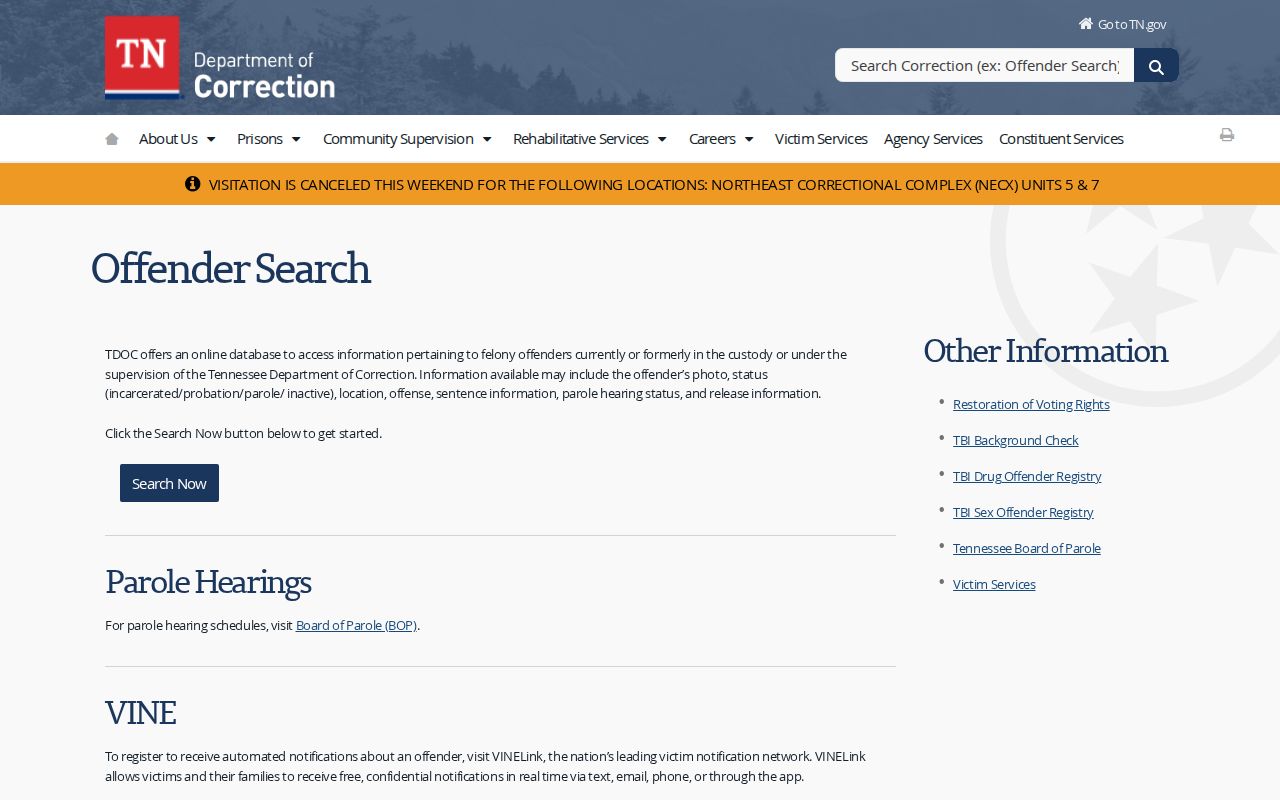
The captured launch page establishes the right statewide channel, while the matched detail and formal release records establish a particular person's status.
The FOIL search interface then provides the actual name and identifier route.
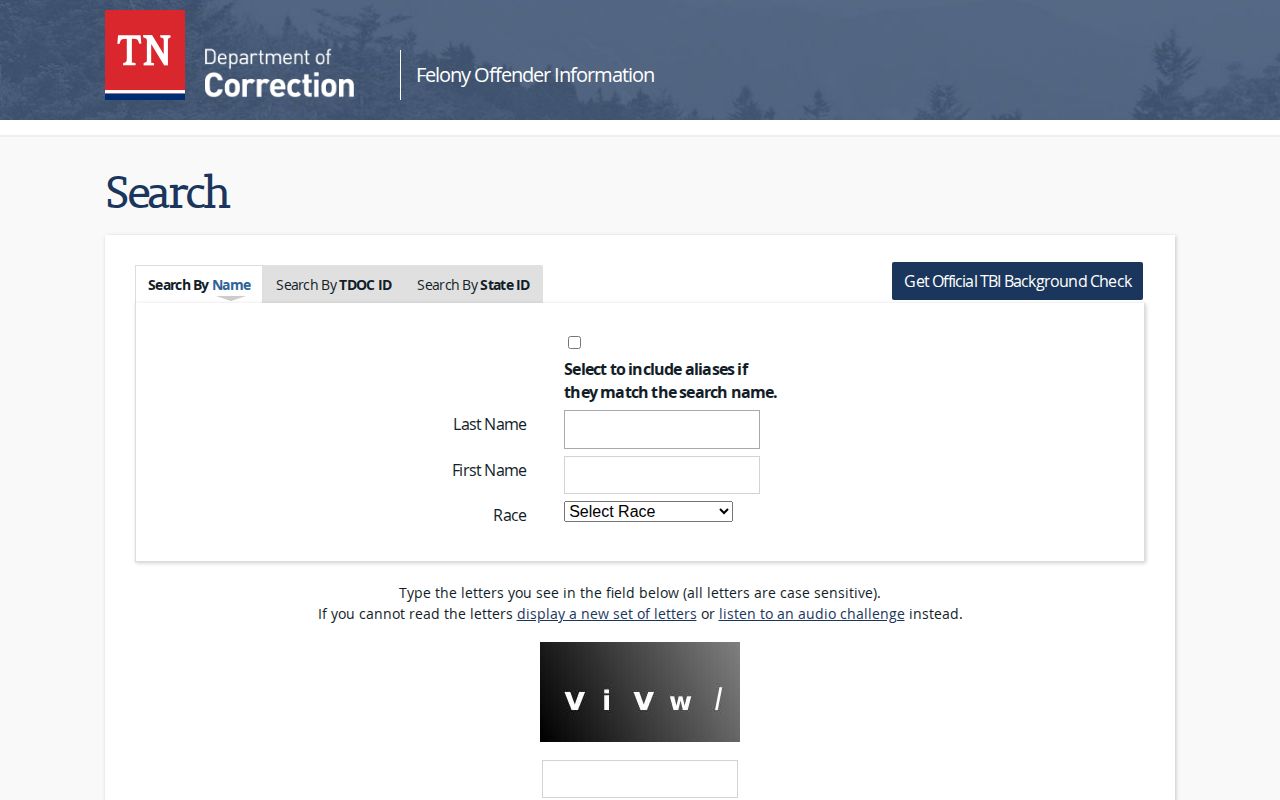
Use those fields to prevent a false match, then open the detail record and read its labels exactly.
TDOC Release Verification Chain
A sound conclusion states both the event and its scope. “FOIL reports parole” means TDOC reports community supervision. “FOIL reports inactive” means the active relationship shown there is inactive. Neither statement proves that no other court order, custodian, or duty exists. A future Release Eligibility Date should be described as projected or eligible, never as a completed release date.
For a Stewart County case, retain the county transfer record as the bridge into TDOC. Then preserve the FOIL result and, when needed, the formal state release document. The Stewart County release search provides the county and court paths when a person never entered state custody. This channel-specific method is more accurate than relying on absence from either roster.
TDOC Release Authority Records
TDOC Policy 511.03 shows why a public status and a formal release record answer different questions. The release workflow can track the offender name and TDOC identifier, sentence effective and expiration information, release eligibility or maximum-sentence information, current location, number of convictions, release authority, and the staff member who processed the event. A related victim notice can identify the conviction county, offense, type and date of release, sentence expiration, and intended residence city and state. Public production may omit or redact some internal fields.
Those records are the documentary fallback when FOIL shows only a broad status. Ask for an existing release checklist, certificate, expiration letter, or sentence computation tied to the matched offender. Do not assume that every FOIL entry exposes every policy-form field. A public locator is designed for status checking, while the maintained file records the administrative authority and calculation behind that status.
TDOC also participates in VINE for state-prison events. Users can search Tennessee by offender name or ID and register for phone, email, text, or TTY notices offered for the record. A VINE transfer alert remains movement. A release alert is prompt corroboration, not the release certificate. Reconcile it with FOIL status and the formal record when exact state departure matters.
TDOC Sentence Calculation Limits
Tennessee sentence calculations can contain several dates because they represent different legal concepts. TDOC tracks release eligibility, sentence expiration, and other maximum or safety-valve information under the applicable sentence structure. Credits, loss of credits, added court documents, new sentences, detainers, and Board action can separate or move those dates. The phrase “everyone serves 85 percent” is not a reliable statewide rule because offense dates, classifications, statutes, and sentence terms differ.
For a qualifying felony sentence of one year or more served in a county jail, Tennessee law can still assign calculation duties to TDOC. That makes state Sentence Information relevant to some Stewart cases even when no state prison housed the person. Confirm the place of custody separately. A state calculation does not turn Stewart County Detention Center into a TDOC institution, and a calculated eligibility date does not prove release.